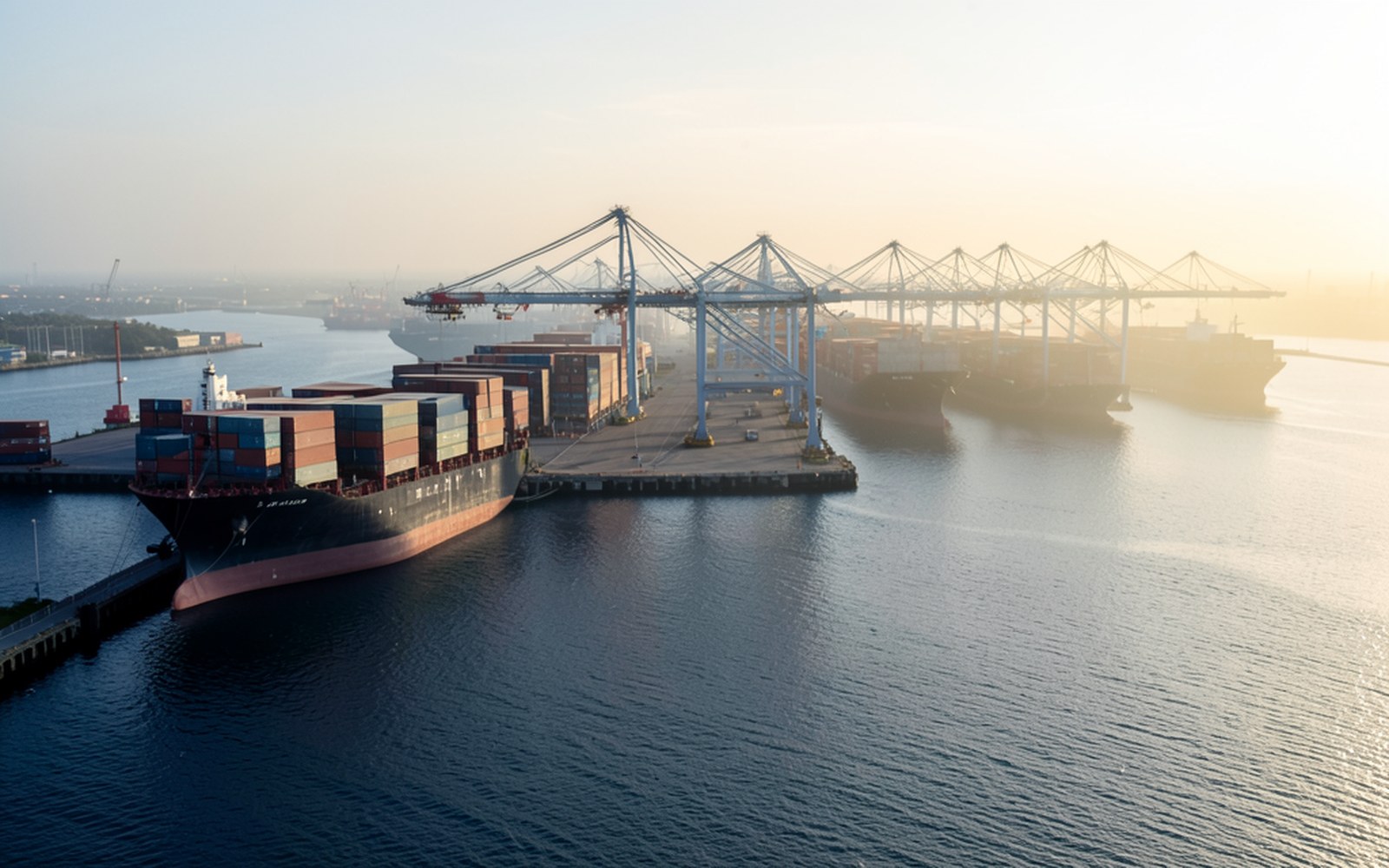
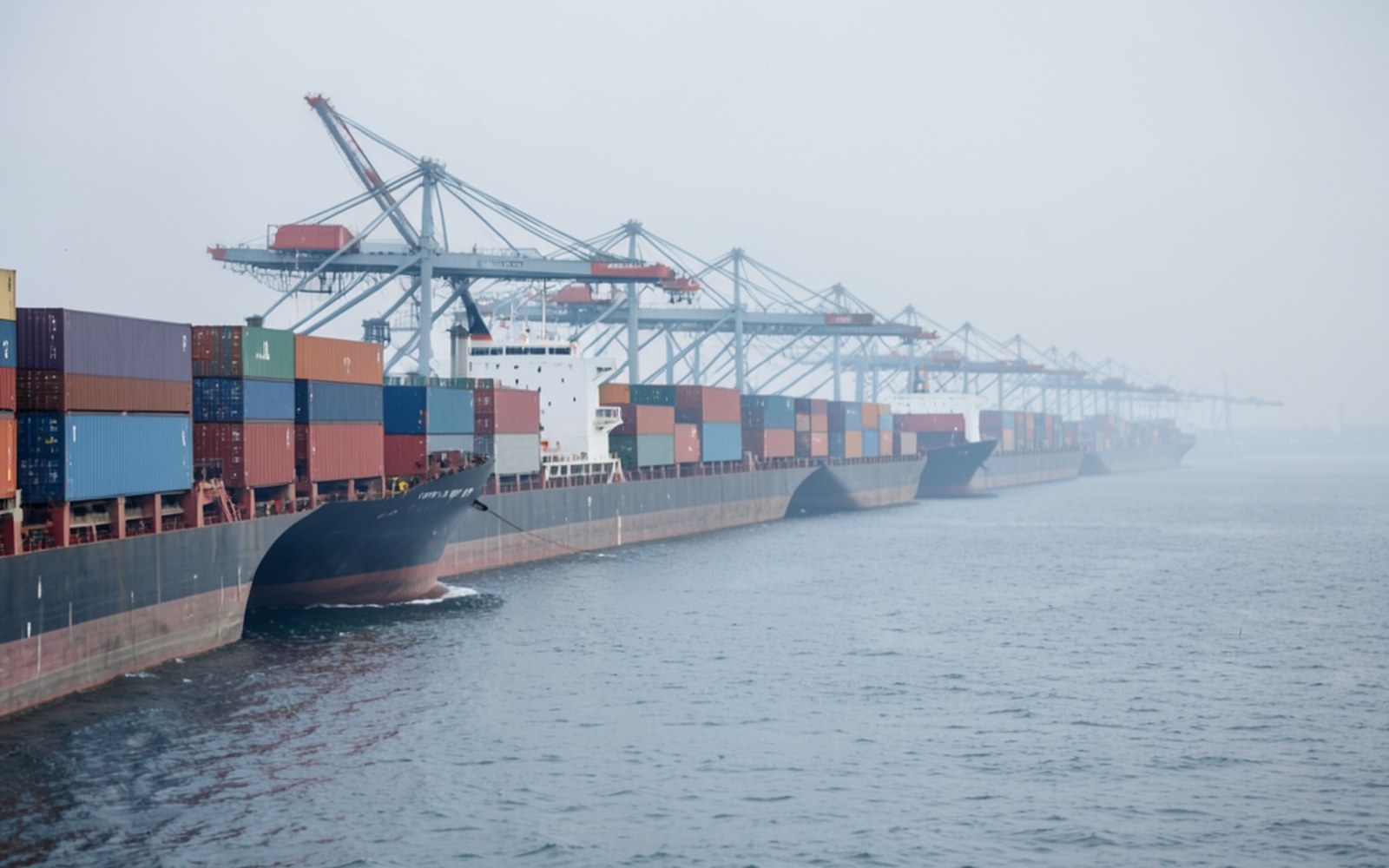
The 16,556 teu Ever Eon transited the Suez Canal on 7-8 November, Evergreen's first containership passage since 19 December 2023 and the last Ocean Alliance partner to return to the route. Ever Edit followed on 11 November and the 20,124 teu Ever Gifted is scheduled to transit on 17 November on the alliance's Asia-Mediterranean MD2 service. Three more eastbound transits are planned before the end of the year.
Evergreen is also restoring direct China-Red Sea links. Its ad hoc OGRD service relaunches from 12 November with four ships of 7,024-9,466 teu on a fortnightly rotation through Jeddah, Sokhna and Aqaba, starting with the 7,024 teu Ever Superb from Qingdao on 14 November. Emirates Shipping Line starts a fortnightly Central/South China-Red Sea service from Shanghai on 13 November with three ships of 2,500-4,900 teu serving the same three ports.
The canal is carrying more than double August's volume
About 3.4m teu of containership capacity passed through Suez in the four weeks to late October, according to Lloyd's List Intelligence, more than double August levels but still well below the 5.5m teu that transited in October 2023. The return is being led by the largest ships: 24 vessels above 20,000 teu used the canal in October against 13 in September, 65 ships of 16,000-19,999 teu set a monthly record, and 71 of 10,000-15,999 teu were the most since December 2023.
MDST estimates that more than 70% of Asia-Europe sailings now transit the Red Sea in at least one direction. It calculates that rerouting Asia-Mediterranean services in both directions could release around 300,000 teu without carriers cutting weekly sailings below the levels they maintained during the Cape of Good Hope diversions, and that around another 950,000 teu could come back over three months if Ocean Alliance and MSC restore further services.
Rates are already easing
Drewry's World Container Index fell 2% to US$4,305 per 40ft on 12 November, a third consecutive weekly decline. Shanghai-New York dropped 3% to US$9,020, its lowest since August 2026, and Shanghai-Los Angeles fell 2% to US$7,416; Shanghai-Rotterdam was 3% lower at US$3,504 while Shanghai-Genoa held at US$4,168. The composite is still 132% higher than a year earlier.
Carriers are trying to hold the line. Eight blank sailings have been announced for next week against four this week, and higher freight-all-kinds rates and peak season surcharges have been announced on Asia-Europe and Mediterranean routes for the second half of November. Drewry expects transpacific rates to fall again next week and Asia-Europe rates to edge up.
Congestion moves to the other end
Average vessel waiting time at Shanghai rose to 49 hours last week from 36 the week before, reversing eleven consecutive weeks of improvement. In northern Europe, Flexport expects arriving capacity to reach 131% of normal in week 47, with about 40% of it arriving via Suez - 31 ships through the canal and 61 around the Cape of Good Hope that week. It treats arrivals above 120% of normal as a congestion risk and forecasts at least three weeks above that threshold between mid-November and January.
Rotterdam's average container dwell time was 3.37 days in week 42, with yard utilisation at 80-90%, according to Flexport. At Jeddah, where much of the new Red Sea capacity is being pointed, Expeditors reported landside delays of 10-12 days after discharge in September.
Shorter Suez routings cut transit times by seven to ten days, but the saving only holds if the box clears the terminal. For bookings into northern Europe in late November and December, check the arrival window and the terminal, not just the proforma transit time.